| Selected Publications |
|
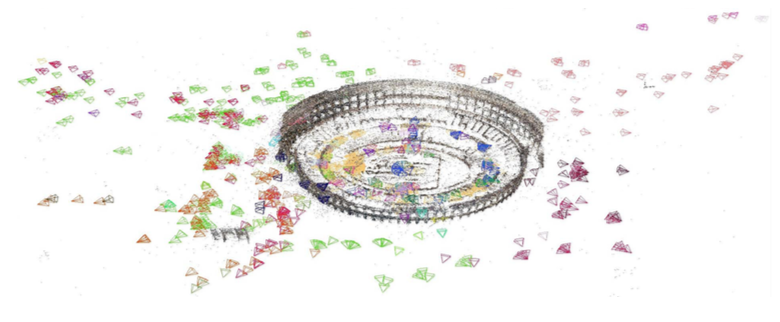
Efficient Non-Consecutive Feature Tracking for Robust Structure-From-Motion
Guofeng Zhang, Haomin Liu, Zilong Dong, Jiaya Jia, Tien-Tsin Wong, and Hujun Bao
IEEE Transactions on Image Processing (TIP),
25(12), 2016
|
|
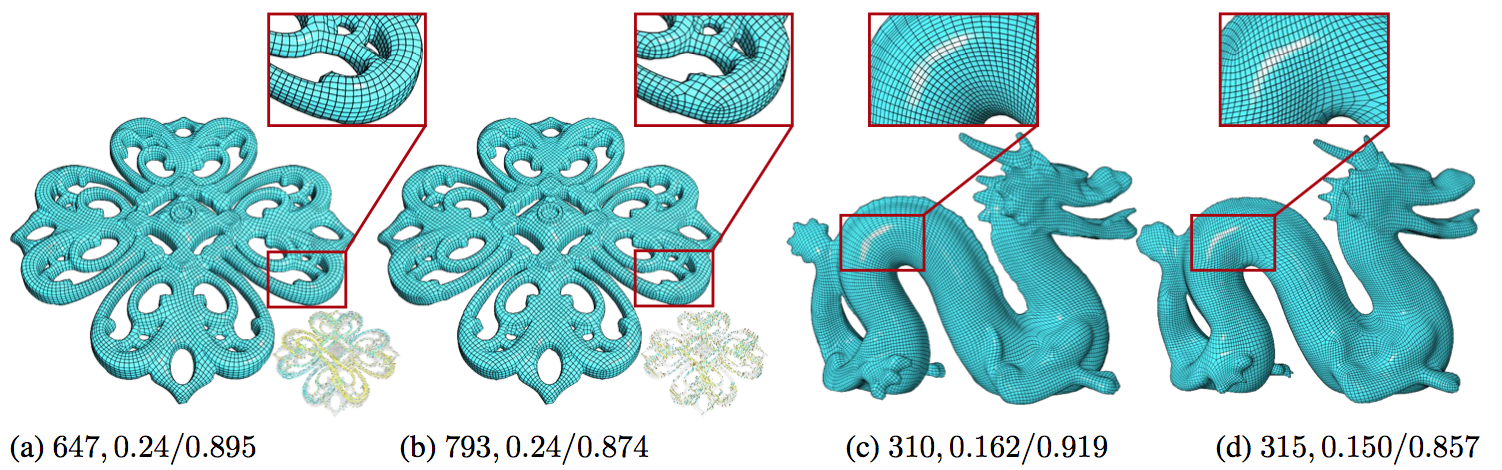
All-Hex Meshing using Closed-Form Induced Polycube
Xianzhong Fang, Weiwei Xu, Hujun Bao, Jin Huang
ACM Transactions on Graphics (TOG),
35(4), 2016
|
|
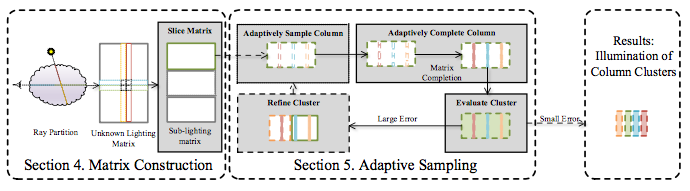
Adaptive Matrix Column Sampling and Completion for Rendering Participating Media
Yuchi Huo, Rui Wang, Tianlei Hu, Wei Hua, Hujun Bao
ACM Transactions on Graphics (TOG),
35(6):1-11, 2016
|
|
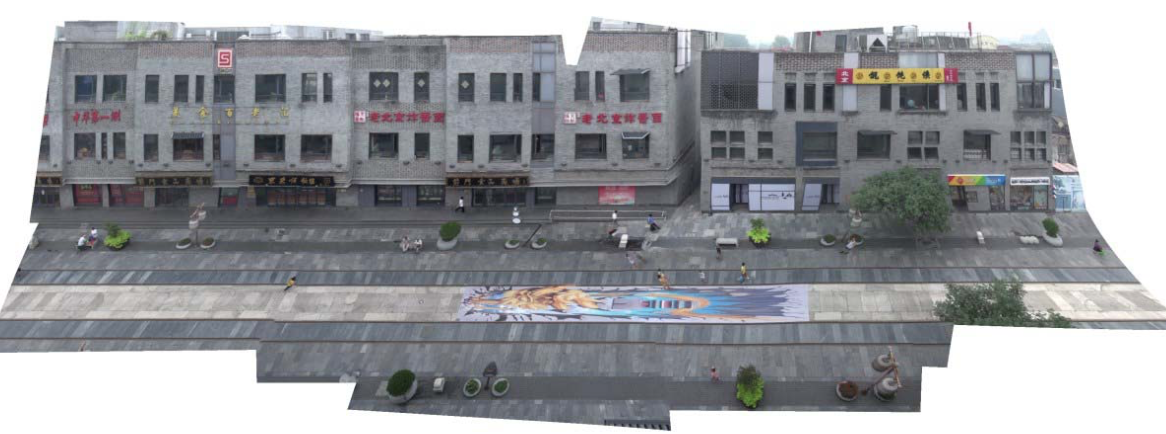
Multi-Viewpoint Panorama Construction With Wide-Baseline Images
Guofeng Zhang, Yi He, Weifeng Chen, Jiaya Jia, and Hujun Bao
IEEE Transactions on Image Processing (TIP),
25(7):3099-3111, 2016
|
|
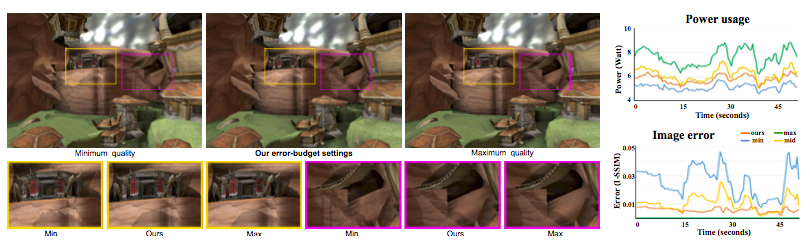
Real-time Rendering on a Power Budget
Rui Wang, Bowen Yu, Julio Marco, Tianlei Hu, Diego Gutierrez, Hujun Bao
ACM Transactions on Graphics (TOG),
(Proceedings of ACM SIGGRAPH 2016), 2016
|
|
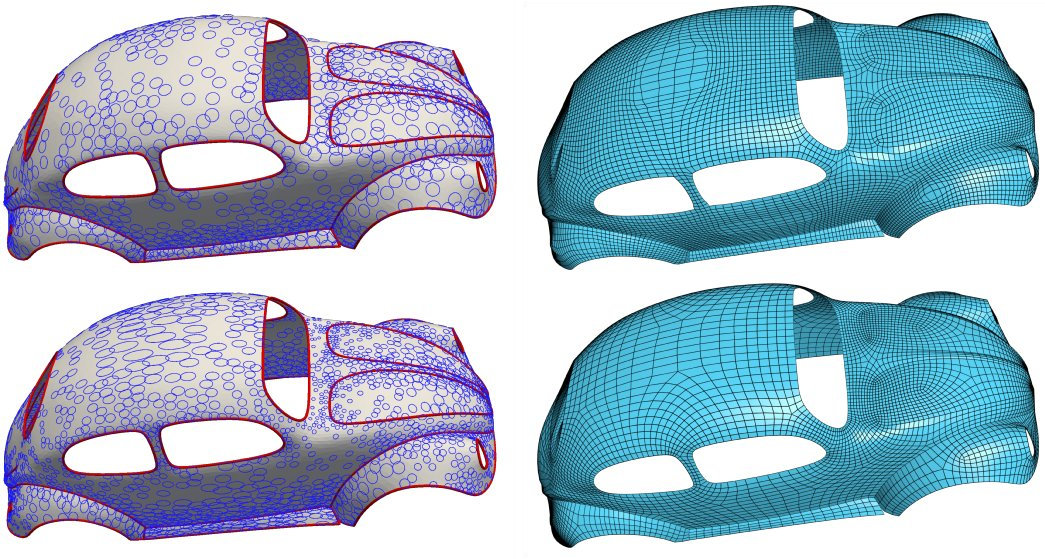
Frame Field Generation through Metric Customization
Tengfei Jiang, Xianzhong Fang, Jin Huang, Hujun Bao, Yiying Tong, Mathieu Desbrun
ACM Transactions on Graphics (TOG),
(conditional accept) , 2015
|
|
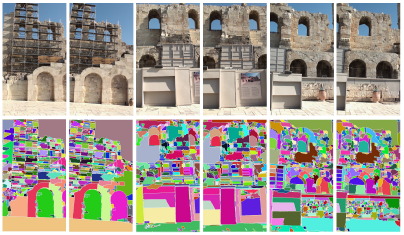
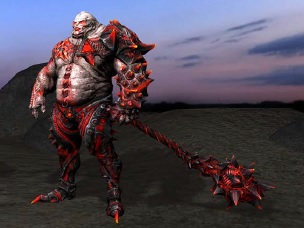
Spatio-Temporal Video Segmentation of Static Scenes and Its Applications
Hanqing Jiang , Guofeng Zhang, Huiyan Wang and Hujun Bao
IEEE Transactions on Multimedia,
17(1):3-15, 2015
|
|
Automatic Shader Simplification Using Surface Signal Approximation
Rui Wang, Xianjin Yang, Yazhen Yuan, Wei Chen, Kavita Bala, Hujun Bao
ACM Transactions on Graphics (TOG),
33(6), 2014.
|
|
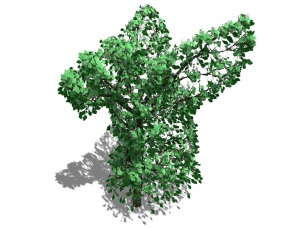
Variational Tree Synthesis
Rui Wang, Yinhui Yang, Hongxin Zhang, Hujun Bao
Computer Graphics Forum,
33(8), pp. 82-94, 2014.
|
|
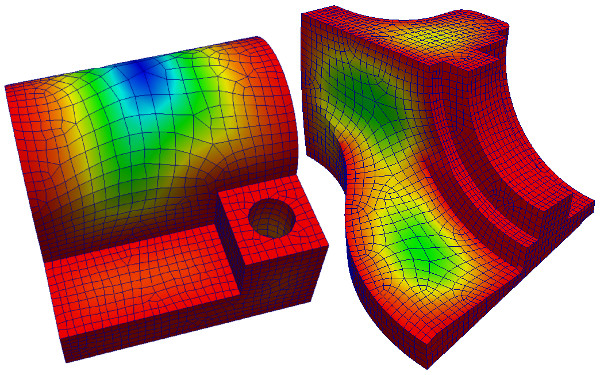
Spectral Quadrangulation with Feature Curve Alignment and Element Size Control
Ruotian Ling, Jin Huang, Bert Juettle,Feng Sun, Hujun Bao and Wenping Wang
ACM Transactions on Graphics (TOG),
11:1--11:11 , 2014
|

|
Space-Time Editing of Elastic Motion through Material Optimization and Reduction
Siwang Li, Jin Huang, Fernando de Goes, Xiaogang Jin, Hujun Bao and Mathieu Desbrun
ACM Transactions on Graphics (TOG),
33 (4) , 2014
|
|
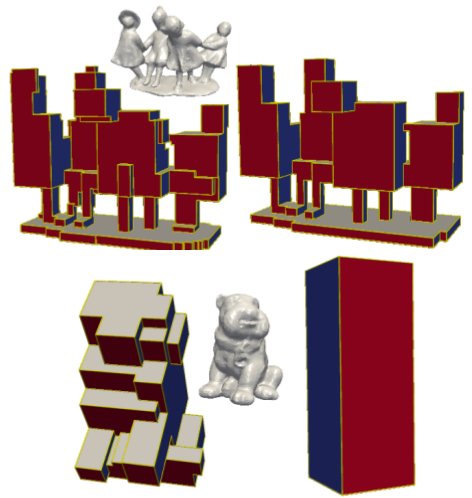
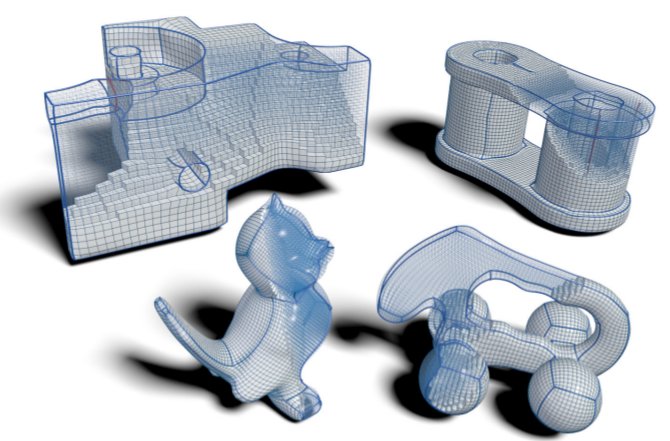
L1-based Construction of Polycube Maps from Complex Shapes
Jin Huang, Tengfei Jiang, Zeyun Shi, Yiying Tong, Hujun Bao and Mathieu Desbrun
ACM Transactions on Graphics (TOG),
33 (3) , 2014
|
|
Frame Field Singularity Correction for Automatic Hexahedralization
Tengfei Jiang, Jin Huang, Yuanzhen Wang, Yiying Tong and Hujun Bao
IEEE Transactions on Visualization and Computer Graphics (TVCG),
20(8):1189-1199 , 2014
|
|
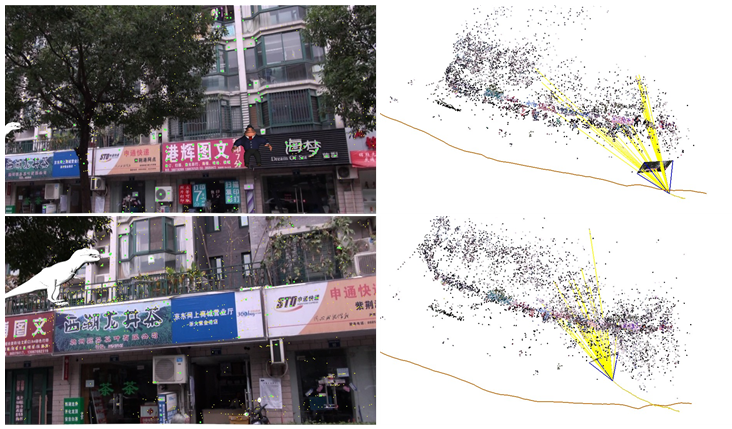
Robust 3D Reconstruction with an RGB-D Camera
Kangkan Wang, Guofeng Zhang and Hujun Bao
IEEE Transactions on Image Processing,
23(11):4893-4906, 2014
|
|
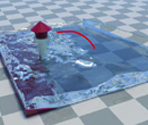
Efficient Keyframe-Based Real-Time Camera Tracking Zilong Dong, Guofeng Zhang, Jiaya Jia, and Hujun Bao
Computer Vision and Image Understanding,
118: 97-110, 2014
|
|
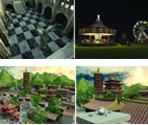
Interactive Localized Liquid Motion Editing
Zherong Pan, Jin Huang, Yiying Tong, Changxi Zheng and Hujun Bao
ACM Transactions on Graphics (TOG),
32(6), ACM SIGGRAPH ASIA 2013
|
|
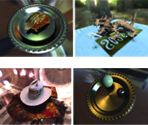
GPU-based Out-of-Core Many-Lights Rendering
Rui Wang, Yuchi Huo, Yazhen Yuan, Kun Zhou, Wei Hua, Hujun Bao
ACM Transactions on Graphics (TOG),
32(6), ACM SIGGRAPH ASIA 2013
|
|
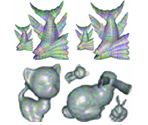
Analytic Double Product Integrals for All-Frequency Relighting
Rui Wang, Minghao Pan, Weifeng Chen, Zhong Ren, Kun Zhou, Wei Hua, Hujun Bao
IEEE Transactions on Visualization and Computer Graphics (TVCG),
19(7):1133-1142, (2013)
|
|
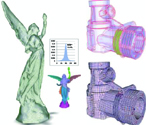
Image-Space Texture-Based Output-Coherent Surface Flow Visualization
Jin Huang, Zherong Pan, Guoning Chen, Wei Chen, Hujun Bao
IEEE Transactions on Visualization and Computer Graphics (TVCG),
19(9):1476-1487, (2013)
|
|
A Divide-and-Conquer Approach to Quad Remeshing
Muyang Zhang, Jin Huang, Xinguo Liu, Hujun Bao
IEEE Transactions on Visualization and Computer Graphics (TVCG),
19(6):941-952, (2013)
|
|
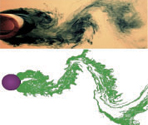
Wake Synthesis For Shallow Water Equation
Zherong Pan,Jin Huang,Yiying Tong,Hujun Bao
Computer Graphics Forum,
31(7-1):2029-2036, (2012)
|
|
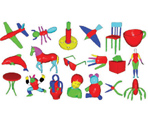
Semi-supervised Mesh Segmentation and Labeling
Jiajun Lv,Xinlei Chen,Jin Huang,Hujun Bao
Computer Graphics Forum,
31(7-2):2241-2248, (2012)
|
|
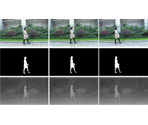
Consistent Depth Maps Recovery from a Trinocular Video Sequence
Wenzhuo Yang,Guofeng Zhang,Hujun Bao,Jiwon Kim,Ho-Young Lee
IEEE Conference on Computer Vision and Pattern Recognition(CVPR),
2012: 1466-1473
|
|
3D Reconstruction of Dynamic Scenes with Multiple Handheld Cameras
Hanqing Jiang,Haomin Liu,Ping Tan,Guofeng Zhang,Hujun Bao
European Conference on Computer Vision (ECCV),
2:601-615,2012
|
|
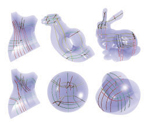
Boundary Aligned Smooth 3D Cross-Frame Field
Jin Huang,Yiying Tong,Hongyu Wei,Hujun Bao
ACM Transactions on Graphics (TOG),
30(6):143,2011
|
|
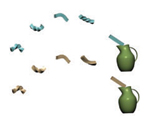
Interactive Shape Interpolation through Controllable Dynamic Deformation
Jin Huang,Yiying Tong,Kun Zhou,Hujun Bao,Mathieu Desbrun
IEEE Trans. Vis. Comput. Graph.,
17(7): 983-992,2011
|
|
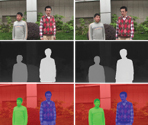
Simultaneous Multi-Body Stereo and Segmentation
Guofeng Zhang,Jiaya Jia,Hujun Bao
IEEE International Conference on Computer Vision (ICCV),
826-833,2011
|
|
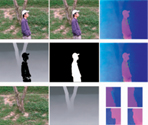
Robust Bilayer Segmentation and Motion/Depth Estimation with a Handheld Camera
Guofeng Zhang,Jiaya Jia,Wei Hua,Hujun Bao
IEEE Transactions on Pattern Analysis and Machine Intelligence (TPAMI),
33(3):603-617,2011
|
|
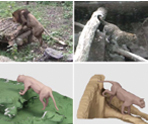
Motion Imitation with a Handheld Camera
Guofeng Zhang,Hanqing Jiang,Jin Huang,Jiaya Jia,Tien-Tsin Wong,Kun Zhou,Hujun Bao
IEEE Transactions on Visualization and Computer Graphics (TVCG),
17(10):1475-1486,2011
|
|
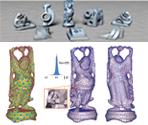
A Wave-based Anisotropic Quadrangulation Method
Muyang Zhang,Jin Huang,Xinguo Liu,Hujun Bao
ACM Transactions on Graphics (TOG),
29(4),2010
|
|
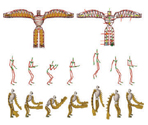
Cage-based deformation transfer
Lu Chen,Jin Huang,Hanqiu Sun,Hujun Bao
Computers & Graphics,
34(2):107-118,2010
|
|
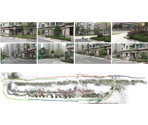
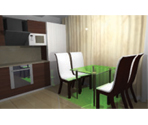
Efficient Non-Consecutive Feature Tracking for Structure-from-Motion
Guofeng Zhang,Zilong Dong,Jiaya Jia,Tien-Tsin Wong,Hujun Bao
European Conference on Computer Vision (ECCV),
5:422-435,2010
|
|
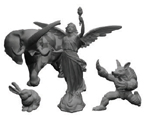
An Efficient GPU-based Approach for Interactive Global Illumination
Rui Wang,Rui Wang,Kun Zhou,Minghao Pan,Hujun Bao
ACM Transactions on Graphics (TOG),
28(3),2009
|
|
Out-of-Core Multigrid Solver for Streaming Meshes
Xiaohan Shi,Hujun Bao,Kun Zhou
ACM Transactions on Graphics (TOG),
28(5),2009
|
|
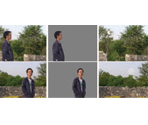
Live Video Montage with a Rotating Camera
Zilong Dong,Lei Jiang,Guofeng Zhang,Qing Wang,Hujun Bao
Comput. Graph. Forum,
28(7):1745-1753,2009
|
|
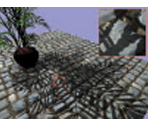
Fast Sub-pixel Antialiased Shadow Maps
Minghao Pan,Rui Wang,Weifeng Chen,Kun Zhou,Hujun Bao
Computer Graphics Forum,
28(7):1927-1934,2009
|
|
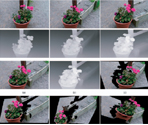
Consistent Depth Maps Recovery from a Video Sequence
Guofeng Zhang,Jiaya Jia,Tien-Tsin Wong,Hujun Bao
IEEE Transactions on Pattern Analysis and Machine Intelligence (TPAMI),
31(6): 974-988,2009
|
|
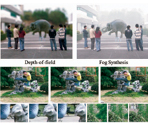
Refilming with Depth-Inferred Videos
Guofeng Zhang,Zilong Dong,Jiaya Jia,Liang Wan,Tien-Tsin Wong,Hujun Bao
IEEE Transactions on Visualization and Computer Graphics,
15(5): 828-840,2009
|
|
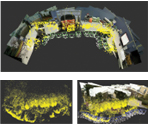
Keyframe-Based Real-Time Camera Tracking
Zilong Dong,Guofeng Zhang,JiayaJia,Hujun Bao
IEEE International Conference on Computer Vision (ICCV),
1538-1545,2009
|