![]() |
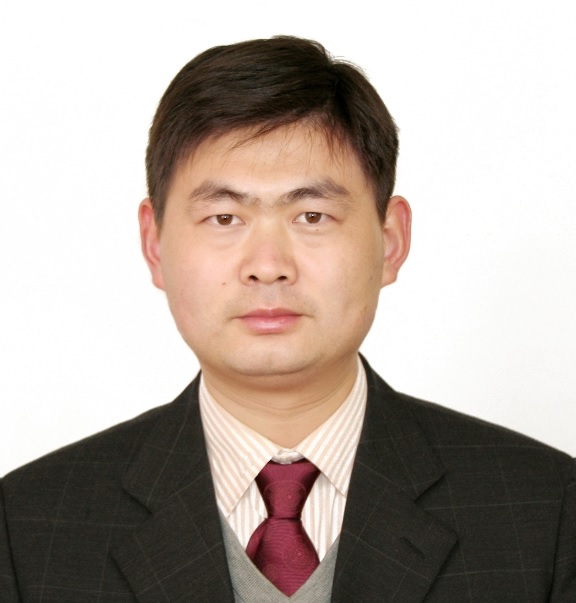
Hongwei Lin Associate Professor |
|
Education
|
|---|
|
|
Awards
|
|---|
|
|
Professional Activity | ||
|---|---|---|
|
|
Ongoing Funding Project
| ||
|---|---|---|
|
| Teaching
|
||
|---|---|---|
|
Publications |
|
|---|---|
2009 |
|
![]() |
FEA-mesh editing with feature constrained. pdf CAD/CG¡¯09, Journal of Computer Science and Technology, Accecpted. Chuhua Xian, Shuming Gao, Hongwei Lin, and Dong Xiao. This paper proposes a framework for FEA-mesh editing with feature constrained. In the framework, cage-based technique is first used to edit the base-decomposition model. Vertices of the constrained featureare transformed into a local form, and then reconstructed after determining the common boundary. Feature rotation constraint derives from the normal change of the boundary plane. Parameters are analyzed before editing operation, and our method permits the user to add constraints on the parameters of the feature. This framework can also keep consistence for the disconnected assembly mesh model. Experimental results show that constrained features hold precisely after mesh editing. Additionally, experimental datav alidate the efficiency of our method, achieving real-time response. |
![]() |
Automatic generation of coarse bounding cages from dense meshes. pdf IEEE International Conference on Shape Modeling and Applications 2009, Acceptted Chuhua Xian, Hongwei Lin, Shuming Gao. The coarse bounding cage of a dense mesh plays important roles in computer graphics, computer vision, and geometric design. Specifically, in volume-based deformation, a coarse bounding cage is required to manipulate the dense mesh model it enclosed; in subdivision surface fitting, the fitting starts from a coarse cage bounding the fitted dense mesh or point set; and so on. However, the generation of a coarse bounding cage is mainly by interactive ways, which are very tedious and time-consuming. In this paper, we develop a fully automatic method to generate a coarse cage bounding a dense mesh model. The automatically generated coarse bounding cage can keep the topological structure and major geometric features of the original mesh model, which is validated by theoretical analysis and experimental data presented in this paper. Further more, we employ the automatically generated coarse bounding cage in some applications, such as deformation, and subdivision fitting, producing good results. |
![]() |
On the derivative formula of a rational Bezier curve at a corner. pdf Applied Mathematics and Computation, 210(1), 197-201, 2009.(SCI/EI) Hongwei Lin In this paper, we develop the exact arbitrary order derivative formula of a rational Bezier curve at its corner. Some examples are presented to demonstrate the computation of the exact derivatives. |
![]() |
Poisson based reuse of freeform features with NURBS representation. pdf Computers in Industry, 60(1), 64-74, 2009. (SCI/EI) Wei Zhao, Shuming Gao, Yusheng Liu, Hongwei Lin. The effective reuse of freeform features represented by NURBS is still an open issue. In this paper, a novel approach to the reuse of freeform features with NURBS representation is proposed. Firstly, the conditions for preserving differential properties of reused freeform features are derived, and a reuse-oriented representation of freeform features is put forward. Based on them, a reuse algorithm of freeform features is developed, which adopts Poisson equation, knots insertion and degree elevation to achieve the preservation of the differential geometry properties and the adaptability. The approach is implemented and some examples are given. |
2008 |
|
![]() |
A Simple Method for Approximating Rational Bezier Curve Using Bezier Curves. pdf Computer Aided Geometric Design, 25(8), 697-699 , 2008. (SCI/EI) Youdu Huang, Huaming Su, Hongwei Lin. This paper presents a simple method for approximating a rational B¨¦zier curve with B¨¦zier curve sequence, whose control points are those of degree-elevated rational B¨¦zier curves. It is proved that the derivatives with any given degree of the B¨¦zier curve sequence constructed this way would niformly converge to the corresponding derivatives of the original rational B¨¦zier curve. |
![]() |
Watertight trimmed NURBS. pdf ACM Transactions on Graphics, 27(3), 2008. (SCI/EI) Thomas W. Sederberg, G. Thomas Finnigan, Xin Li, Hongwei Lin, Heather Ipson. This paper addresses the long-standing problem of the unavoidable gaps that arise when expressing the intersection of two NURBS surfaces using conventional trimmed-NURBS representation. The solution converts each trimmed NURBS into an untrimmed T-Spline, and then merges the untrimmed T-Splines into a single, watertight model. The solution enables watertight fillets of NURBS models, as well as arbitrary feature curves that do not have to follow isoparameter curves. The resulting T-Spline representation can be exported without error as a collection of NURBS surfaces. |
2007 |
|
![]() |
Adaptive Patch-based Mesh Fitting in Reverse Engineering. pdf Computer-Aided Design, 39(12), 1134-1142, 2007.12. (SCI/EI) Hongwei Lin, Wei Chen, Hujun Bao In this paper, we propose a novel adaptive mesh fitting algorithm that fits a triangular model with G1 smoothly stitching bi-quintic Bezier patches. Our algorithm first segments the input mesh into a set of quadrilateral patches, whose boundaries form a quadrangle mesh. For each boundary of each quadrilateral patch, we construct a normal curve and a boundary-fitting curve, which fit the normal and position of its boundary vertices respectively. By interpolating the normal and boundary-fitting curves of each quadrilateral patch with a Bezier patch, an initial G1 smoothly stitching Bezier patches is generated. We perform this patch-based fitting scheme in an adaptive fashion by recursively subdividing the underlying quadrilateral into four sub-patches. The experimental results show that our algorithm achieves precision-ensured Bezier patches with G1 continuity and meets the requirements of reverse engineering. |
![]() |
Generating strictly non-self-overlapping structured quadrilateral grids. pdf Computer-Aided Design. 39(9), 709-718, 2007.9. (SCI/EI) Hongwei Lin, Kai Tang, Ajay Joneja, Hujun Bao. In this paper, we present a BPM (Bezier patch mapping) algorithm which generates a strictly non-self-overlapping structured quadrilateral grid in a given four-sided planar region. Given four pieces of polynomial curves which enclose a simple region in the plane, the algorithm first constructs a Bezier patch which interpolates the four curves (as its four boundary curves), while the inner control points of its control grid remain unknown. In this paper, we show that, for the bijective condition to be satisfied, it is sufficient that the interior points satisfy a set of quadratic inequality equations. Exploiting this key result, we formulate the mapping algorithm as an optimization problem where the constraints are the bijective condition of the Bezier patch mapping (BPM), and the objective is to find out the best from all of the non-self-overlapping grids. Thus, commercial optimization solvers can be used to find the bijective mapping. If a solution to the optimization problems exists, then so does a solution to the mapping problem, and vice-versa. The BPM method is simple and intuitive, and some examples presented in this paper demonstrate its effectiveness. |
![]() |
A Robust Hole-Filling Algorithm for Triangular Mesh. pdf The Visual Computer, 23(12), 987-997, 2007.12. (SCI/EI) Wei Zhao, Shuming Gao, Hongwei Lin. This paper presents a novel hole-filling algorithm that can fill arbitrary holes in triangular mesh models. First, the advancing front mesh technique is used to cover the hole with newly created triangles. Next, the desirable normals of the new triangles are approximated using our desirable normal computing schemes. Finally, the three coordinates of every new vertex are re-positioned by solving the Poisson equation based on the desirable normals and the boundary vertices of the hole. Many experimental results and error evaluations are given to show the robustness and efficiency of the algorithm. |
![]() |
A novel method for vectorizing historical documents of Chinese calligraphy. pdf In Proceedings of 10th International Conference on Computer-Aided Design and Computer Graphics, Beijing, China, 219-224, 2007.10. (EI/ISTP) Junsong Zhang, Hongwei Lin, Jinhui Yu. We develop a novel method for feature point detection and employ it to generate outline font from historical document of Chinese calligraphy. The feature points at a character contour subdivide the contour into segments. Each segment can be then fitted by a parametric curve to obtain the outline font. Some experimental results are also presented in the paper. |
|
2006 |
|
![]() |
Parameterization for Fitting Triangular Mesh. pdf Progress in Natural Science, 16 (11), 1214-1221, 2006.11. (SCI/EI) Hongwei Lin, Guojin Wang, Ligang Liu, Hujun Bao. In reverse engineering, in order to fit a piece of NURBS surface to a triangular mesh surface with four boundaries, the triangular mesh surface needs to be parameterized into a unit square parameter field firstly. Obviously, more uniform distribution of the obtained regular parametric curve grid leads to better fitting surface to the triangular mesh. Due to the uniform distribution of the smooth isotherms in the steady temperature field defined on the triangular mesh surface, the isotherms can act as the iso-parametric curves quite well. However, it is hard to directly solve the 2-dimensional quasi-harmonic equation defined on a triangular mesh surface for getting the steady temperature field on the mesh surface. In this paper, we present a novel method to parameterize an arbitrary triangular mesh surface using the steady temperature field. That is, we construct a lamina with the triangular mesh surface as its border surface firstly; and then calculate the 3-dimensional harmonic equation on the lamina; finally, we can get the steady temperature field defined on the triangular mesh surface. Based on the temperature field, the triangular mesh surface can be parameterized into the unit square parameter field. |
![]() |
Modified Affine Arithmetic in Tensor Form for Trivariate Polynomial Evaluation and Algebraic Surface Plotting. pdf Journal of Computational and Applied Mathematics, 195(1-2), 155-171, 2006.9. (SCI/EI) Huahao Shou, Hongwei Lin, Ralph Martin, Guojin Wang. This paper extends the modified affine arithmetic in matrix form method for bivariate polynomial evaluation and algebraic curve plotting in 2D to modified affine arithmetic in tensor form for trivariate polynomial evaluation and algebraic surface plotting in 3D. Experimental comparison shows that modified affine arithmetic in tensor form is not only more accurate but also much faster than standard affine arithmetic when evaluating trivariate polynomials. |
![]() |
Conditions for Determining the Regularity of B¨¦zier Curve and Surface. pdf Journal of Software, 17(3), 516-524, 2006.3. (EI) Hongwei Lin, Qing Wang, Hujun Bao. Regularity is an important algebraic property of parametric curve and surface, which depends on the parameterization of parametric curve and surface. In computer-aided manufacturing, the processed parametric curve and surface should be regular, so the parametric curve and surface generated by computer-aided design should be regular first. However, the computation of determining the regularity of parametric curve and surface by solving equation or system of equations induced by the definition of regularity is considerably complex, and is actually infeasible. In this paper, by transforming the parametric representations of derivative vector curve (of B¨¦zier curve) and normal vector surface (of B¨¦zier surface) to their implicit representations, a simple and practical sufficient condition for determining the regularity of B¨¦zier curve and surface is presented. |
| 2005 | |
![]() |
Totally Positive Bases and Progressive Iteration Approximation. pdf Computers and Mathematics with Applications, 50(3-4), 575-586, 2005.4. (SCI/EI) Hongwei Lin, Hujun Bao, Guojin Wang. In this paper, we study the progressive iteration approximation property of a curve (tensor product surface) generated by blending a given data point set and a set of basis functions. The curve (tensor product surface) has the progressive iteration approximation property as long as the basis is totally positive and the corresponding collocation matrix is non-singular. Thus, the B-spline and NURBS curve (surface) have the progressive iteration approximation property, and B¨¦zier curve (surface) also has the property if the corresponding collocation matrix is non-singular. |
![]() |
Curve Reconstruction Based on an Interval B-spline Curve. pdf The Visual Computer, 21(6), 418-427, 2005.6. (SCI/EI) Hongwei Lin, Wei Chen, Guojin Wang. Curve reconstruction that generates a piece of centric curve from a piece of planar strip-shaped point cloud, is a fundamental problem in reverse engineering. In this paper, we present a new curve reconstruction algorithm based on interval B-spline curve. The algorithm constructs a rectangle sequence approximating the point cloud using a new data clustering technique, which facilitates the determination of curve order implied in the shape of the point cloud. A quasi-centric point sequence and two pieces of boundary point sequences are then computed, based on which a piece of interval B-spline curve that represents the geometric shape of the point cloud is constructed. Its centric curve is the final reconstructed curve. The whole algorithm is intuitive, simple and efficient as demonstrated by experimental results. |
| 2004 | |
![]() |
Constructing Iterative Non-Uniform B-spline Curve and Surface to Fit Data Points. pdf SCIENCE IN CHINA, Series F, 47(3), 315-331, 2004.3. (SCI) Hongwei Lin, Guojin Wang, Chenshi Dong. In this paper, based on the idea of profit and loss modification, we present the iterative non-uniform B-spline curve and surface to settle a key problem in computer aided geometric design and reverse engineering, that is, constructing the curve (surface) fitting (interpolating) a given ordered point set without solving a linear system. We start with a piece of initial non-uniform B-spline curve(surface) which takes the given point set as its control point set. Then by adjusting its control points gradually with iterative formula, we can get a group of non-uniform B-spline curves (surfaces) with gradually higher precision. In this paper, using modern matrix theory, we strictly prove that the limit curve (surface) of the iteration interpolates the given point set. The non-uniform B-spline curves (surfaces) generated with the iteration have many advantages, such as satisfying the NURBS standard, having explicit expression, gaining locality, and convexity preserving, etc. |
![]() |
A Mesh Reconstruction Algorithm Driven by Intrinsic Property of Point Cloud. pdf Computer-Aided Design, 36(1), 1-9, 2004.1. (SCI/EI) Hongwei Lin, C. L. Tai, Guojin Wang. This paper presents an algorithm for reconstructing a triangle mesh surface from a given point cloud. Starting with a seed triangle, the algorithm grows a partially reconstructed triangle mesh by selecting a new point based on an intrinsic property of the point cloud, namely, the sampling uniformity degree. The reconstructed mesh is essentially an approximate minimum-weight triangulation to the point cloud constrained to be on a two-dimensional manifold. Thus, the reconstructed surface has only small topological difference from the surface of the sampled object. Topological correct reconstruction can be guaranteed by adding a post-processing step. |
2003 |
|
![]() |
G1 Continuous Interpolation Curve on Smooth Surface. pdf Journal of Computer-Aided Design and Computer Graphics, 15(5), 541-546, 2003.5. (EI) Hongwei Lin, Guojin Wang. In computer graphics and computer aided geometric design, the techniques of generating an interpolation curve that is restricted on a given smooth surface and holds geometric continuity have shown more and more wide applications. We propose an approach of constructing B¨¦zier spline curve of degree 3 to interpolate the given points on the smooth surface and then project the curve onto this surface with ruled surface. The projected curve keeps G1 continuity. Theoretical deduction and experimentation show that such an approach is effective and produces good results. |
![]() |
Three Dimensional Signed Euclidean Distance Transform and Its Applications. pdf Chinese Journal of Computers, 26(12), 1645-1651, 2003.12. Hongwei Lin, Guojin Wang. The researches for distance t ransform have long history in image processing. In this paper, we extend two dimensional signed distance t ransform to three dimension , optimize it and analyze its computational complexity. Furthermore , we apply it to computer graphics. Firstly , it can be employed to transform the triangular mesh representation of graphics model into it s distance field representation. By the three dimensional signed distance t ransform on the voxel representation of a graphics model , the global search for the point , which is closest to a given space point and on the graphical model , can be simplified to a local search. It greatly reduces the computational complexity. Secondly, and similarly , it can be employed to calculate the minimum distance between two pieces of surfaces in the space. |
![]() |
Modified affine arithmetic is more accurate than centered interval arithmetic or affine arithmetic. pdf In Proceedings of 10th IMA Conference on the Mathematics of Surfaces, LECTURE NOTES IN COMPUTER SCIENCE, Leeds, England, 355-365, 2003.9. (SCI) Huahao Shou, Hongwei Lin, Martin R., Guojin Wang. In this paper we give mathematical proofs of two new results relevant to evaluating algebraic functions over a box-shaped region: (i) using interval arithmetic in centered form is always more accurate than standard affine arithmetic, and (ii) modified affine arithmetic is always more accurate than interval arithmetic in centered form. Test results show that modified affine arithmetic is not only more accurate but also much faster than standard affine arithmetic. We thus suggest that modified affine arithmetic is the method of choice for evaluating algebraic functions, such as implicit surfaces, over a box. |
| 2002 | |
![]() |
Boundary Evaluation for Interval B¨¦zier Curve. pdf Computer-Aided Design, 34(9), 637-646, 2002.9. (SCI/EI) Hongwei Lin, Ligang Liu, Guojin Wang. The objective of this paper is to provide an efficient and reliable algorithm for representing and evaluating the boundary of the interval Bezier curve in 2-and 3-D. The boundary of the planar Bezier curve is represented by a sequence of Bezier curve segments with same degree and line segments in the order they are encountered when marching counter-clockwise along its boundary. The boundary can also be represented as a single B-spline curve having the same degree with the interval Bezier curve. The boundary of the 3-D interval Bezier curve is made up of trimmed Bezier surface patches and rectangular patches. Some examples illustrate our algorithms. |
Last update: Jun. 3, 2009